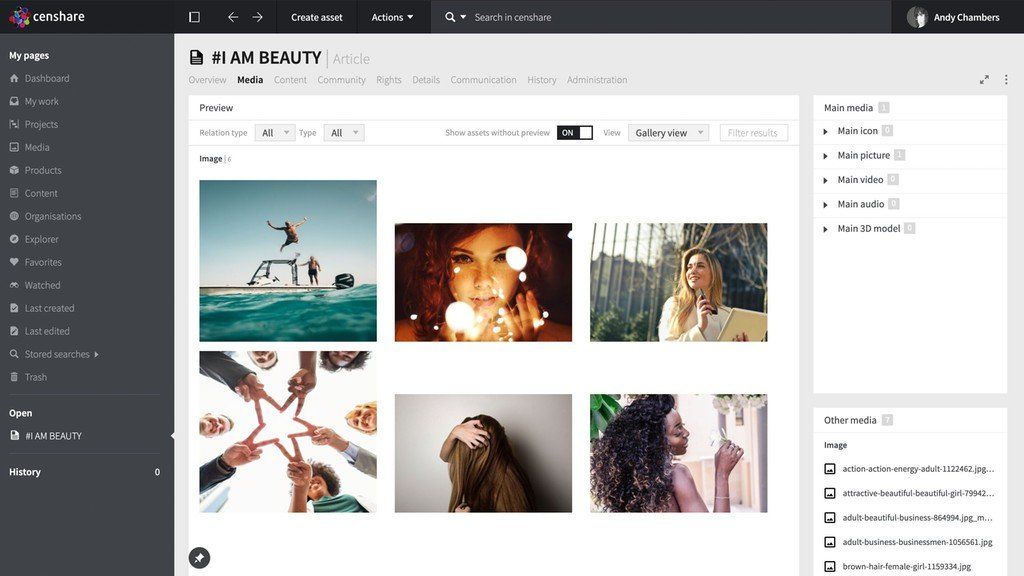
A universal content management platform lets brands connect with their audiences on any channel, in any language, locally or globally.
Josh Van Dyk • February 21, 2026

A modern universal content management platform enables organizations to store any digital asset, transform those assets into high-impact marketing content, and distribute them across any channel, in any language, anywhere in the world.

At its core, this approach creates a centralized Content Hub and Digital Asset Management (DAM) environment that allows teams to produce high-quality content faster, with greater consistency and lower operational risk.

These platforms are designed for enterprise-level workflows where large creative, marketing, and product teams must collaborate efficiently while maintaining brand integrity across regions and channels.

The Market Problem

Most organizations today operate with fragmented content systems. Assets live in disconnected tools, spreadsheets, shared drives, and email chains. Product data and legal content are often outdated or inconsistent.

This leads to:

• Teams wasting time searching for assets
• Duplicate or outdated content being used
• Slow approval and production cycles
• Costly compliance or brand errors
• Inability to scale across regions or brands

Creative teams end up spending too much time on manual coordination instead of delivering customer-focused experiences.

Research consistently shows that marketers believe they could deliver significantly more value if content-related administrative work were reduced. Organizations with centralized content hubs are far more likely to meet communication and campaign goals.

The Technology Approach

A universal content platform brings together three critical capabilities:

Digital Asset Management (DAM)
Content Management
Product Information Management (PIM)

Together, these create a Single Source of Truth for all content and product information.

Key capabilities include:

• Quickly finding the right content through advanced search and metadata
• Working directly in preferred creative tools while assets stay centrally managed
• Eliminating data silos across departments and regions
• Automating workflows, approvals, and localization
• Tracking usage rights, permissions, and performance

Assets can be automatically transformed into multiple formats, languages, and channels, enabling true omnichannel marketing.

Why Centralization Matters

A centralized content hub enables organizations to:

• Maintain consistent branding across global markets
• Reduce manual tasks through workflow automation
• Ensure accuracy of product information and legal disclaimers
• Speed up creative production cycles
• Improve collaboration across teams

Instead of creating content separately for web, social, print, and retail, teams create content once and distribute it everywhere.

This “content first, channel last” approach dramatically improves efficiency and quality.

Advanced Data Architecture

Modern platforms increasingly use semantic or graph-based data structures to connect assets, product information, campaigns, and performance data.

This allows systems to:

• Deliver contextualized and personalized content
• Understand relationships between assets and campaigns
• Enable faster search and discovery
• Support AI-driven automation and recommendations

Unlike traditional file-based storage, relational content models make it easier to manage the complex versioning and localization required in enterprise environments.

Who Benefits Most

These solutions are particularly valuable for:

• Brand and marketing teams
• Creative operations teams
• Product managers
• Media and entertainment organizations
• Retail, manufacturing, and global enterprise brands
• Agencies managing multiple clients or brands

Any organization handling large volumes of digital assets across multiple markets can benefit.

Business Impact

Organizations that adopt centralized content hubs typically see:

• Faster content production
• Reduced operational costs
• Improved brand consistency
• Better compliance and risk management
• Stronger collaboration across teams
• Improved campaign performance

Over time, teams spend less time searching and coordinating and more time creating meaningful customer experiences.

Integration and Flexibility

A modern content platform should integrate seamlessly with:

• Creative tools
• Analytics and BI systems
• E-commerce platforms
• Marketing automation systems
• Localization tools

Open APIs allow organizations to maintain their preferred tools while still operating from a unified content foundation.

Role in the Modern MarTech Stack

Within today’s MarTech ecosystem, a Content Hub and DAM platform sits at the center of the content supply chain, connecting:

• Creative production
• Product information
• Marketing automation
• Customer experience platforms
• Analytics

As you’ve been discussing, this kind of centralized content infrastructure is becoming essential for companies managing high-volume, AI-driven content ecosystems.

It enables scalable personalization, efficient content operations, and better audience engagement across the entire digital media lifecycle.

By Josh Van Dyk February 17, 2026
Combining DAM and PIM Software Unlocks Faster Growth, Better Customer Experiences, and Operational Efficiency, Says Industry Expert Josh Van Dyk
By Joshua Van Dyk May 13, 2025
Create a Digital Backlot and Drive Asset Reuse vs Redo's.
By Josh Van Dyk August 12, 2021
Choosing a DAM that matches the complexity of your needs can be difficult. Many DAM software solutions are great for helping you find assets quickly and making your internal workflows run more smoothly. But with so many vendors and options to choose from, what exactly do you need to consider to find the solution that will best match your needs? Click here to watch this On-Demand video to learn: When to consider procuring a DAM or moving to a more robust system Mistakes to avoid that will save you time and money in the long run How the right solution can aide a holistic, omnichannel experience
By Josh Van Dyk August 12, 2021
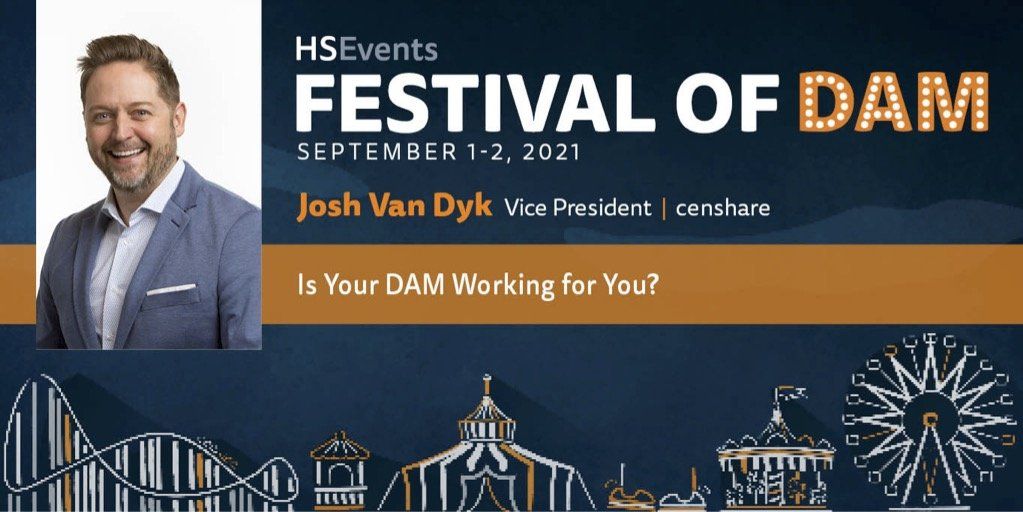
I'm excited to share that I'll be one of the speakers at Henry Stewart’s next online event — the #FestivalofDAM. I'll be sharing how to understand if your DAM is working optimally when to upgrade and tips on where to start alongside Emmsphere’s Chris Leaman. Please join me on September 1-2. For more info and to register for the event, visit the link here: https://lnkd.in/ghzdyV-M
By Josh Van Dyk March 25, 2020
When it comes to buying a digital asset management (DAM) system, digital marketing expert Joshua Van Dyk says it’s best to be prepared. For instance, almost every DAM vendor will provide you with a demo of their system, and most people think that is a good place to start. This lets users identify if the system will ultimately have a look and feel they are comfortable with using. However, before you spend hours seeing a basic overview of several systems, Van Dyk recommends creating a list of specific user journeys that you are looking to see in the demo. Work with the different departments who will be using the DAM to document how they will be using the system and specific features and workflows that would create efficiencies for that user. One of the largest areas of ROI is eliminating low value manual activities and using your DAM system to automate these for your staff. Have a one, three, & five-year plans for how you intend to roll out the different functionalities within the system you choose. “If you are solely focused on only solving todays problems, you will likely choose a system that you will have to replace in 2 years” Joshua Van Dyk says. The last thing you want to do is choose a system that doesn’t give you room to grow into it and you find yourself starting the procurement process over again in a couple of years. This is very time consuming, horrible inefficient, hurts ROI and can really crush your user adoption. So, have a “North Star” that you are looking to achieve over the next 5 years. Clients should also be aware of the tools they are already using in their tech stack, whether those tools can be integrated in a DAM system, and what tools they’re missing. When existing tools can work seamlessly with a DAM system, clients simply see better user adoption and results. Joshua Van Dyk says, this also helps create a single source of truth and enables maximum collaboration within your company. Lastly, Van Dyk recommends that clients be ready for the turnaround time. A good DAM system will take a while to implement and integrate with your other tools, but it will be tailored to suit. Be sure to a lot enough time in your business case for this. For more information please reach out: https://www.joshvandyk.com/contact
By Josh Van Dyk January 27, 2020
While content automation is nothing new, AI is taking automation to an entirely new level. This is especially true in digital asset management (DAM), says digital marketing expert Joshua Van Dyk. AI is creating an evolution in DAM by way of enticing new abilities such as facial and speech recognition, automation, and smart metadata tagging. For the first time ever, marketers and clients can take advantage of smart automated publishing in CMS, targeted syndication, and AI-fueled customer communications management. According to Joshua Van Dyk, “We now have the capability to search through millions of images online with specifications including color, location, gender, and much more.” Not only is this beneficial, but the ability to automate the tagging of nearly two thirds of digital assets makes marketing smarter and more efficient. By using AI in metatagging, the search process is streamlined at a brilliant new level. Joshua Van Dyk is a marketing expert specializing in Digital Asset Management (DAM). “With AI, we can reach amazing new heights,” said Van Dyk. More information about his dynamic solutions can be found at www.joshvandyk.com. About Josh Van Dyk Speaking & Training Josh Van Dyk is a digital transformation expert and speaker who shares his 10+ years of experience in digital marketing with mid-level to enterprise companies looking to take their marketing strategies to the most effective level.
Josh Van Dyk
By Josh Van Dyk July 12, 2019
Josh Van Dyk gives design tips
By Josh Van Dyk July 12, 2019
Josh Van Dyk is a professional web developer who takes clients’ goals and makes them realities when it comes to creating the perfect website. At a recent Jacki McLenaghan Pure Potentials Speakers Retreat, Van Dyk shared the three things that all successful websites have in common, as well as features that sales-driven websites offer. For instance, Van Dyk indulged that the latest website design trends include elements such as calls to action (CTAs), imagery, the ability to book online, an at-a-glance design, written and video testimonials, mobile responsiveness, and video integration. All of these features can help prospects convert into customers by moving them forward in the buying process. According to Van Dyk, there are three things that powerful websites have in common: ease of being found through SEO strategies, backlinks, and security; visual aesthetics; and the ability to generate clients with strategic CTAs and layout. Van Dyk offered this information before an audience of his peers, including business owners and professionals, and he encouraged anyone who wanted to reach website goals to connect with him, especially if they weren’t familiar with terms such as “SEO” and “backlinking”. “Is your website making you money or costing you money?,” he asked. If a website isn’t invoking people to move forward toward making a purchase, then it’s likely costing money. Van Dyk works with clients from all industries who want to leverage the latest digital marketing strategies to draw in new clients through their websites. Van Dyk specializes in helping clients reach their specific goals with individualized services. His digital marketing strategy and analysis services can be used to create powerful new web presences or enhance existing websites. Van Dyk is also available for speaking engagements. About Josh Van Dyk Speaking & Training Josh Van Dyk is a professional speaker who shares his 10+ years of experience in digital marketing with companies of all sizes looking to take their marketing strategies to the most effective level.